PiDP-1 - Building the speaker Panel
Click on any icon image to see the larger photo.
This panel turned out to be quite a challenge for me. There were a couple of challenges that caused a few problems, but nothing that wasn't successfully resolved in the end.
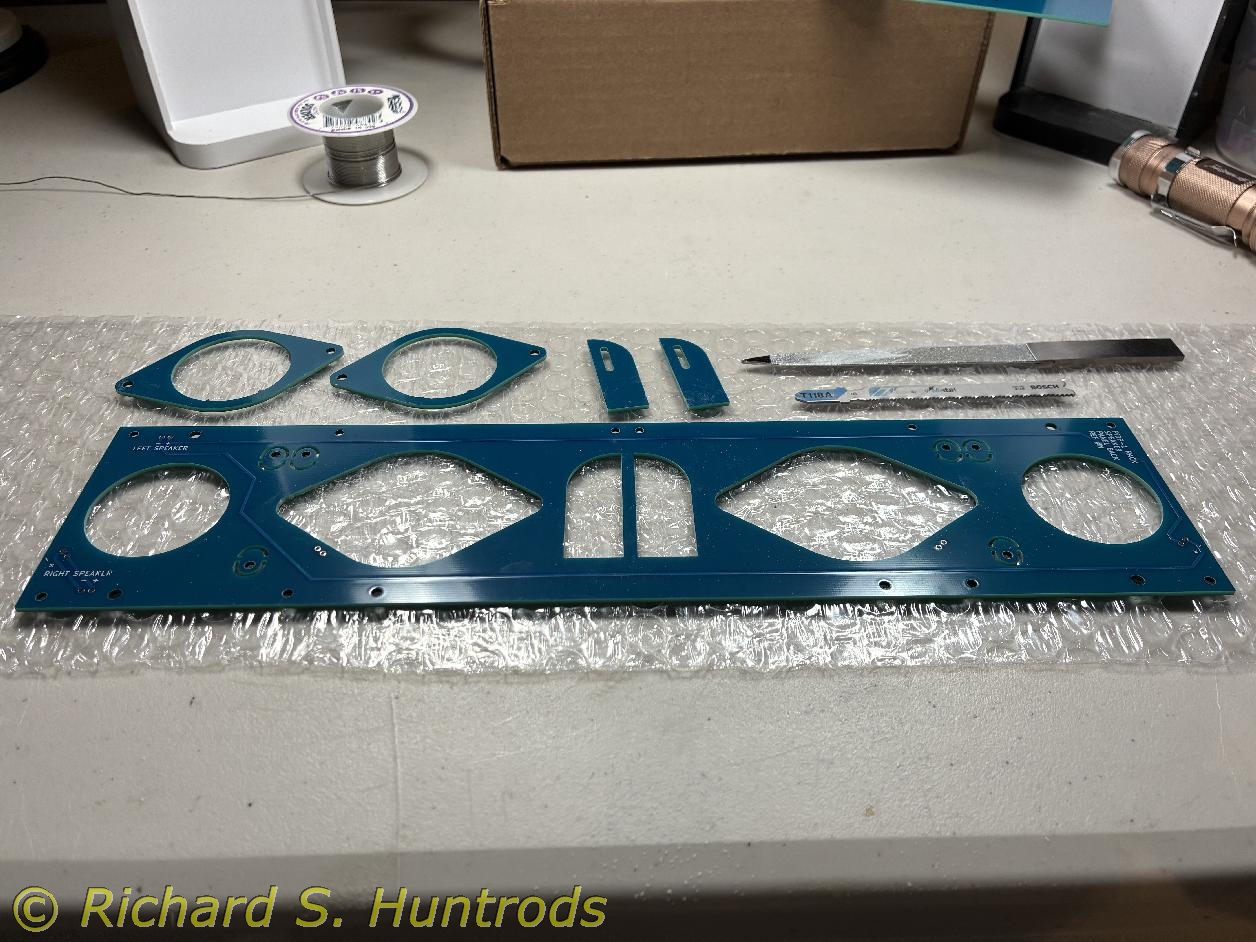
The first challenge was cutting the various pieces out of the inside speaker frame. These are just delicate enough that I didn't want to just snap them out, nor did I want to use a box cutter. In the end I chose a fine saw blade for my Ridgid jigsaw. It fit perfectly and did a perfect cut used as a hand saw. Cleaning up the edges, I used a diamond fingernail file for flats and some emery paper for the round edges.
Mounting the speakers was a bit stressful as you want enough clamping force to grip the speaker firmly but not enough to break the relatively delicate mounting ring. I was also worried the securing nuts might work loose, so solved that problem with a bit of blue thread locker on a toothpick. It secures the nut well, but can still be removed if necessary without force.
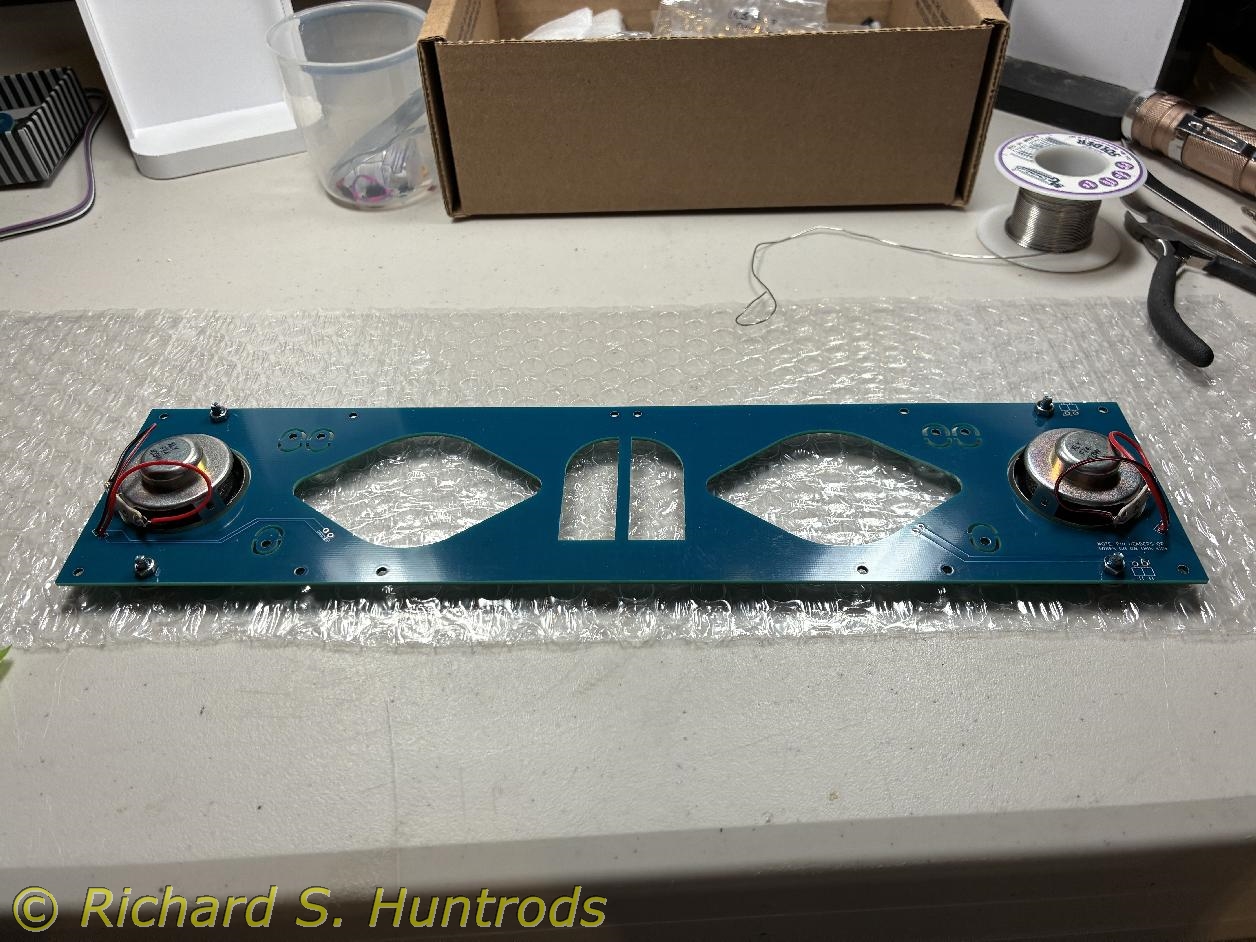
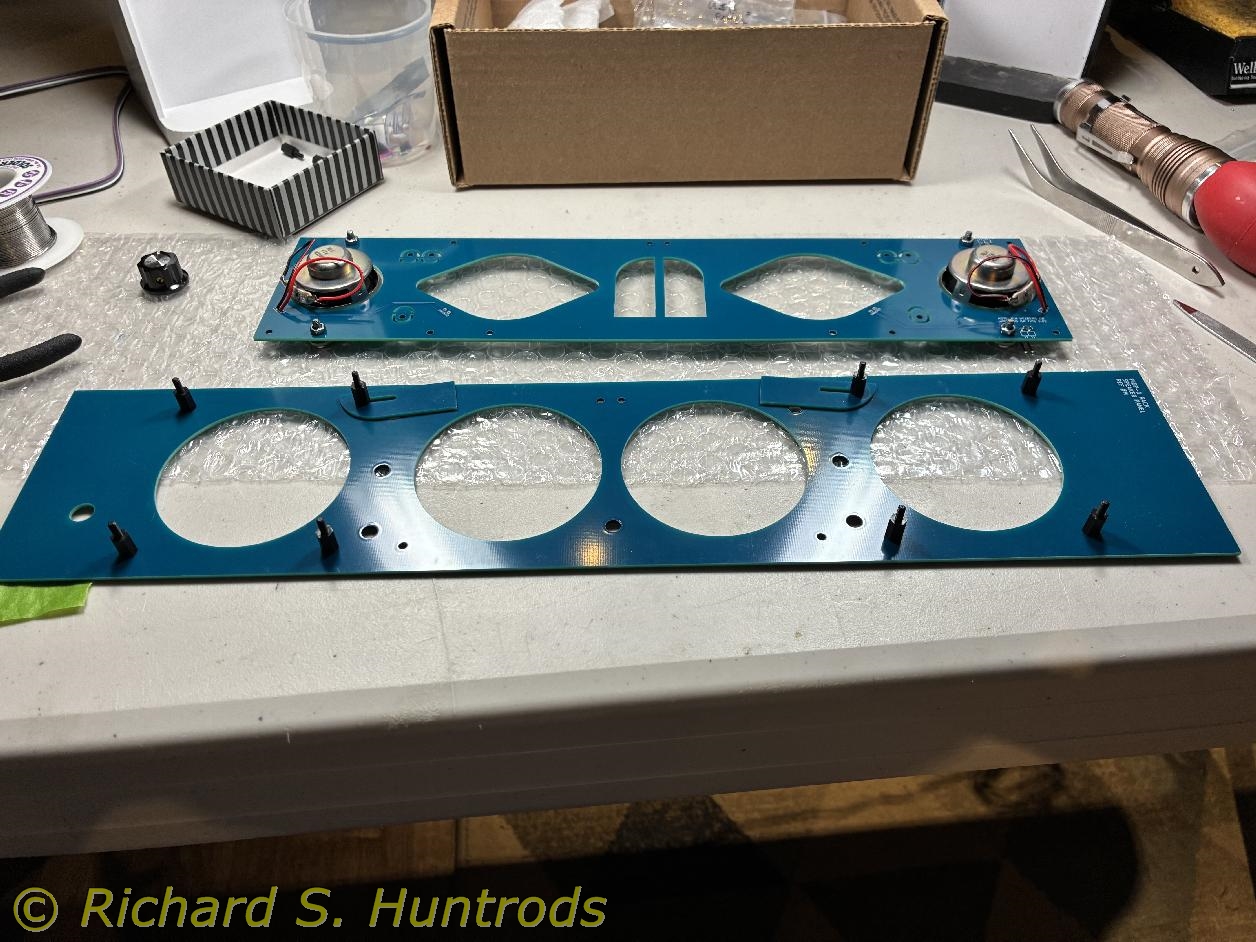
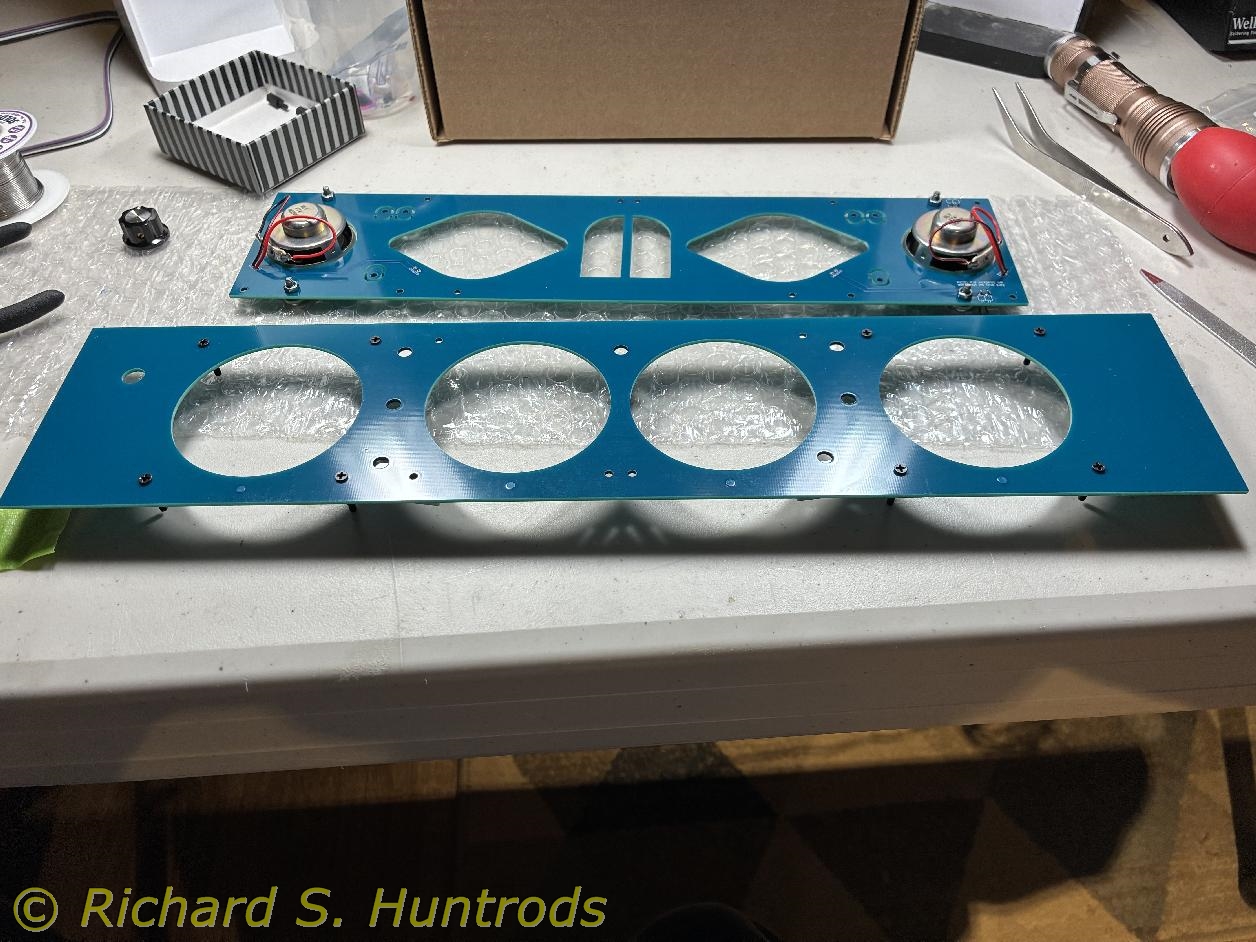
I installed the speaker foam as I was ready to join the two panels together with the standoffs and nuts. I discovered the best way to install the foam was to lay it on the standoffs, then gently press the panels together, poking small holes in the foam. Seeing that is was even and straight, I removed the upper panel and gently worked the foam over the standoffs so it would sit flat against the front panel and loog great. (it does!)
I then added the back panel and the nuts to complete the assembly. I used a 7/32 deep wall socket to tighten all nuts by hand. That's when I noticed an issue that had me take things apart and solder/unsolder jumper pins no less that four (4) times!
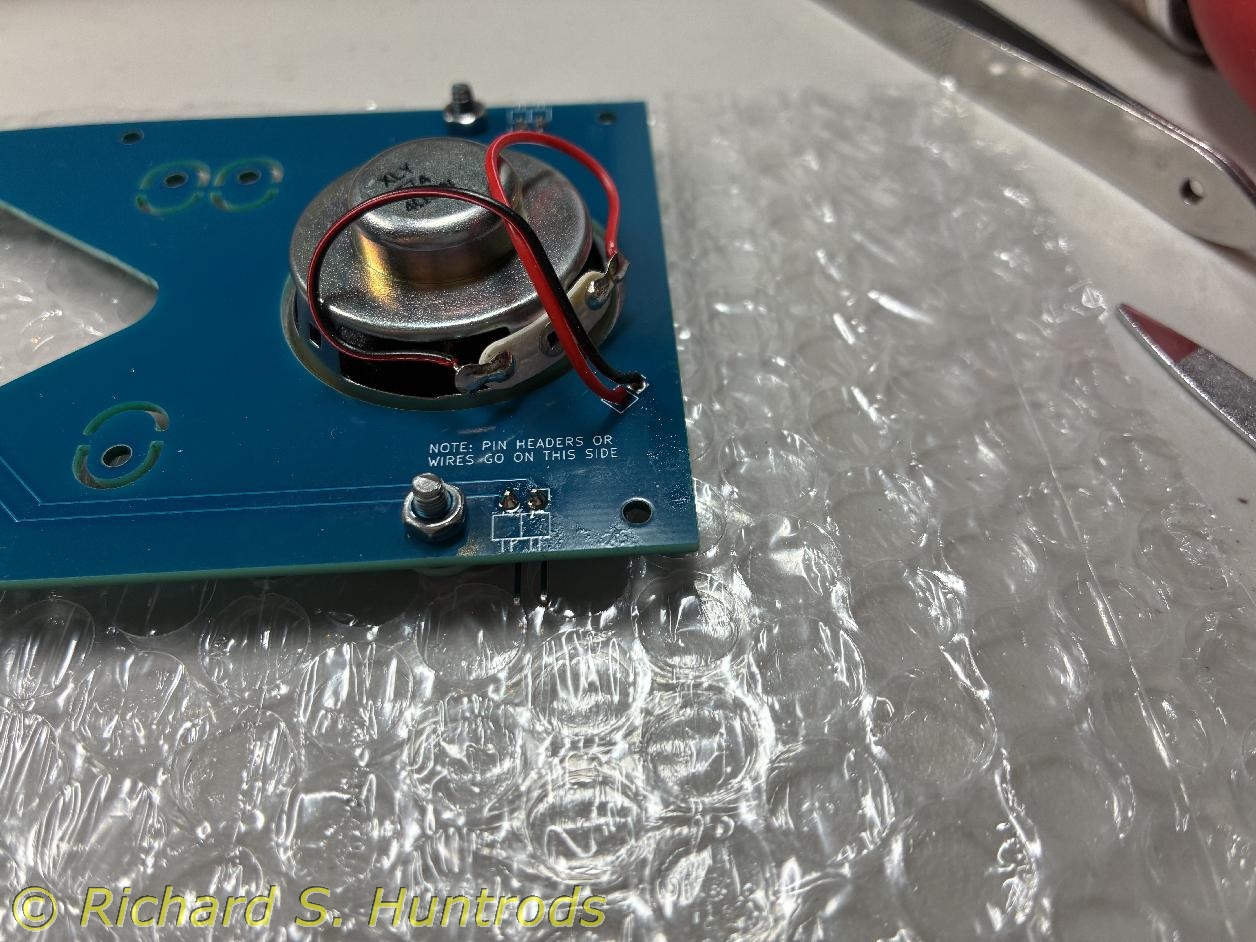
The issue is the initial indication was to solder the right-angle jumper pins for speaker connection to what was the inside edge of the back panel. After assembling the panels, I coudl see the pins were stuck into the speaker foam and not easily accessible. To remove the pins I used my $25 soldering/suction tool (manual, nothing fancy) to clean off the solder and with some difficulty remove the jumpers (two sets, one for each speaker). I thought straight headers would be better, so installed two sets. I put them on the wrong side so had to remove them (more suction!). Once I had them on the right side and tested them, I realized the stuck up far too much to work in the finiched PiDP-1 kit. Once again I had to remove them (more suction!). Finally I decided to use the right-angle pins, but on the back side of the finished panel. Of course I soldered one on the wrong side again and had to take it off. Eventually I had both soldered on where I wanted them and it looked great!
Some notes on the above: The immediate problem with the first pin location was it interfered with the speaker installation rings. I filed down the pin blocks but was never happy with that. My final solution is on the other side so no interference with the speaker mounting at all. However, between desoldering and soldering pins, I had to remove that one speaker a few times. Of course at this point the speaker wires were attached, making it more difficult. Fortunately, the speaker and wires were undamaged by the removal/installation. The $25 desoldering iron is so good that the mounting holes were not damaged at all, even with multiple pin installation/removals. I think the key is that using a proper desoldering tool (with manual suction) is a very quick process. Touch down-push button-remove. Very fast and clean.
The finished speaker panel looks great!


The last step to complete the speaker panel was to install the amplifier and wire it up. This involved soldering a 4X and 2X straight headers to the circuit board, then solder the 1/8 stereo jack to the board. The jack was a bit finicky as the wires were delicate, but there were no real issues.
The amplifier was then mounted on the speaker panel with a spring washer and nut. I used a metric 10mm deep wall socket to secure it. At first it would not sit properly on the back. I found a metal tab meant to dig into something, so used the diamond nail file to sand it down. It then sat perfectly. I mounted it on an angle so the amplifier should not touch the aluminum frame and short out.


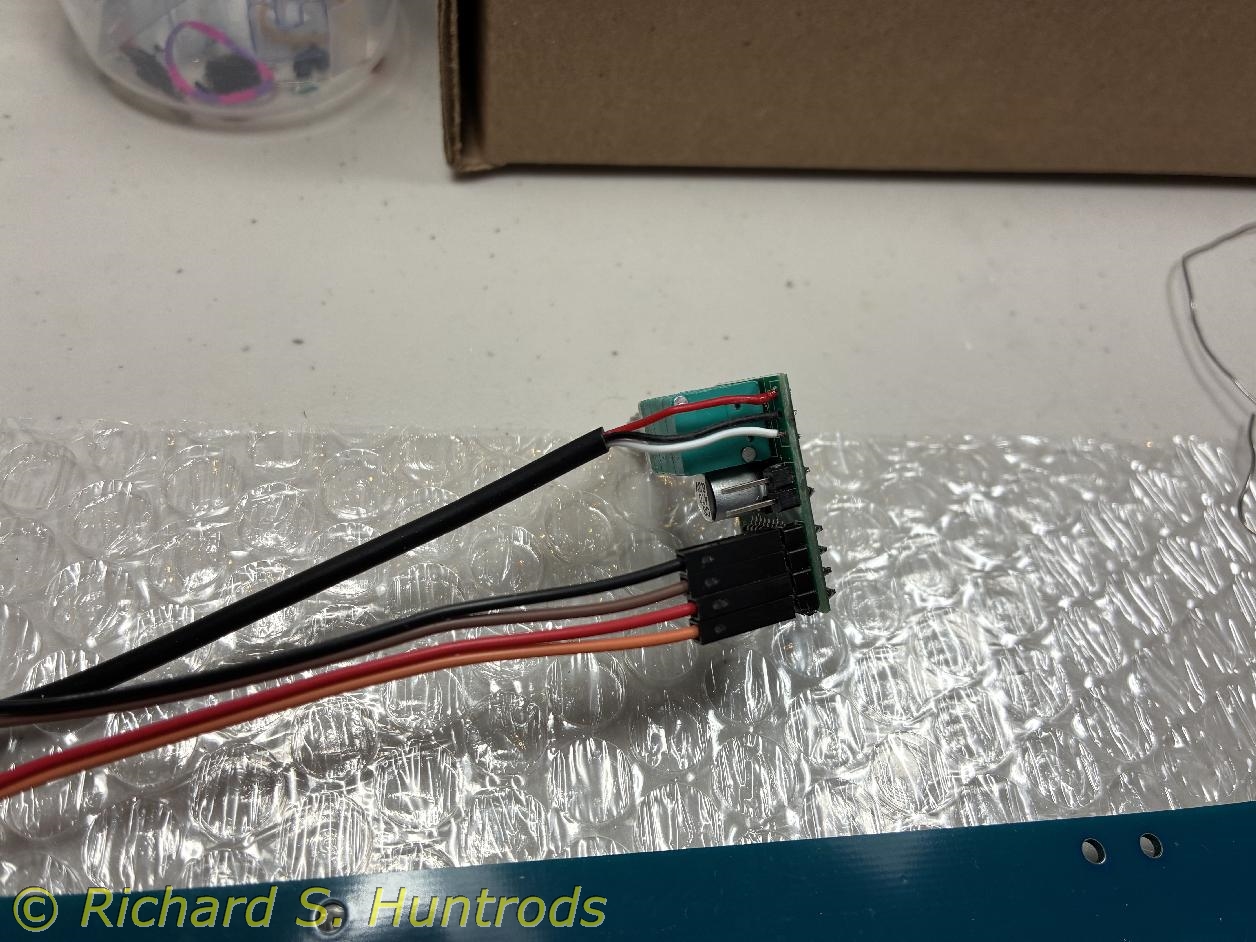
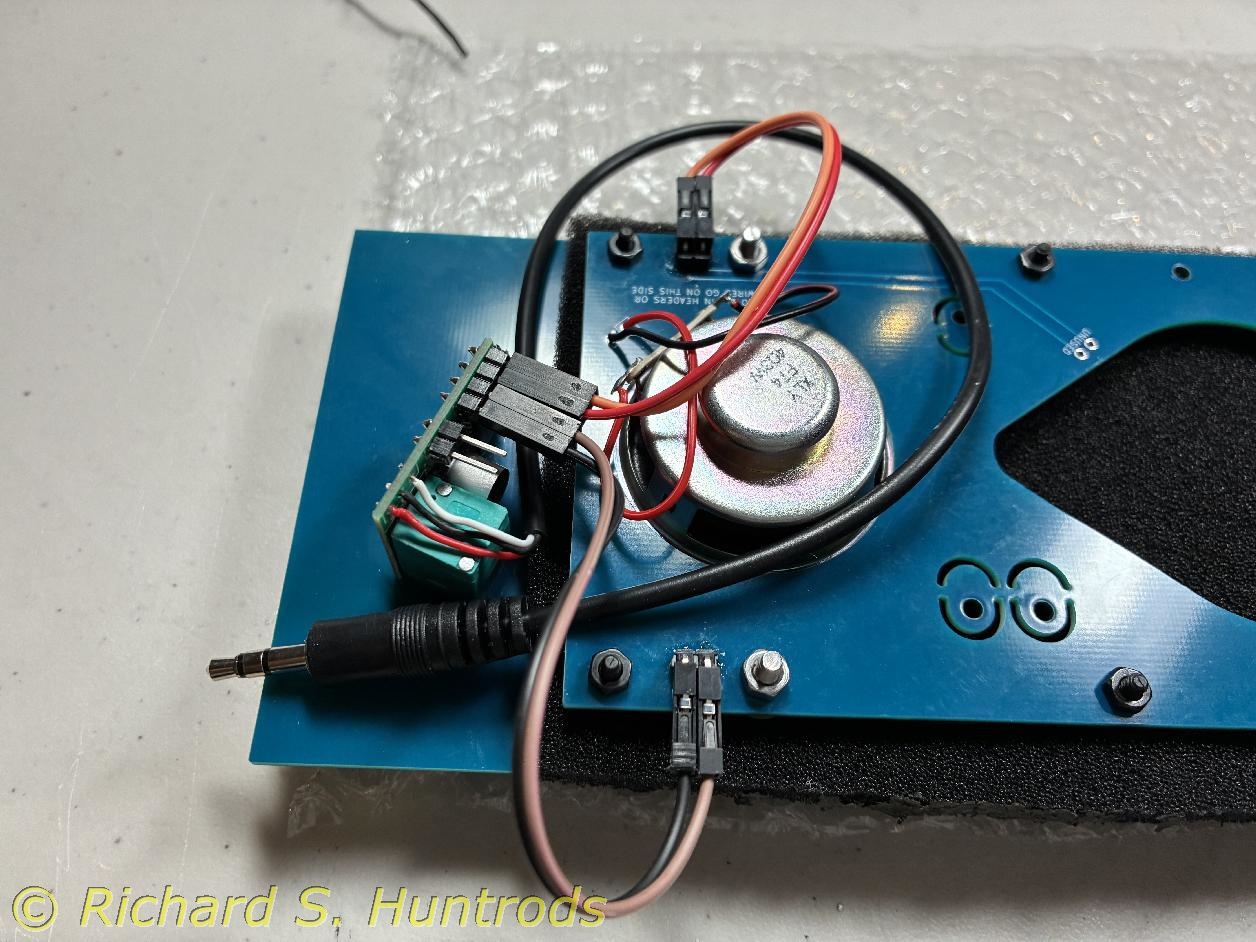
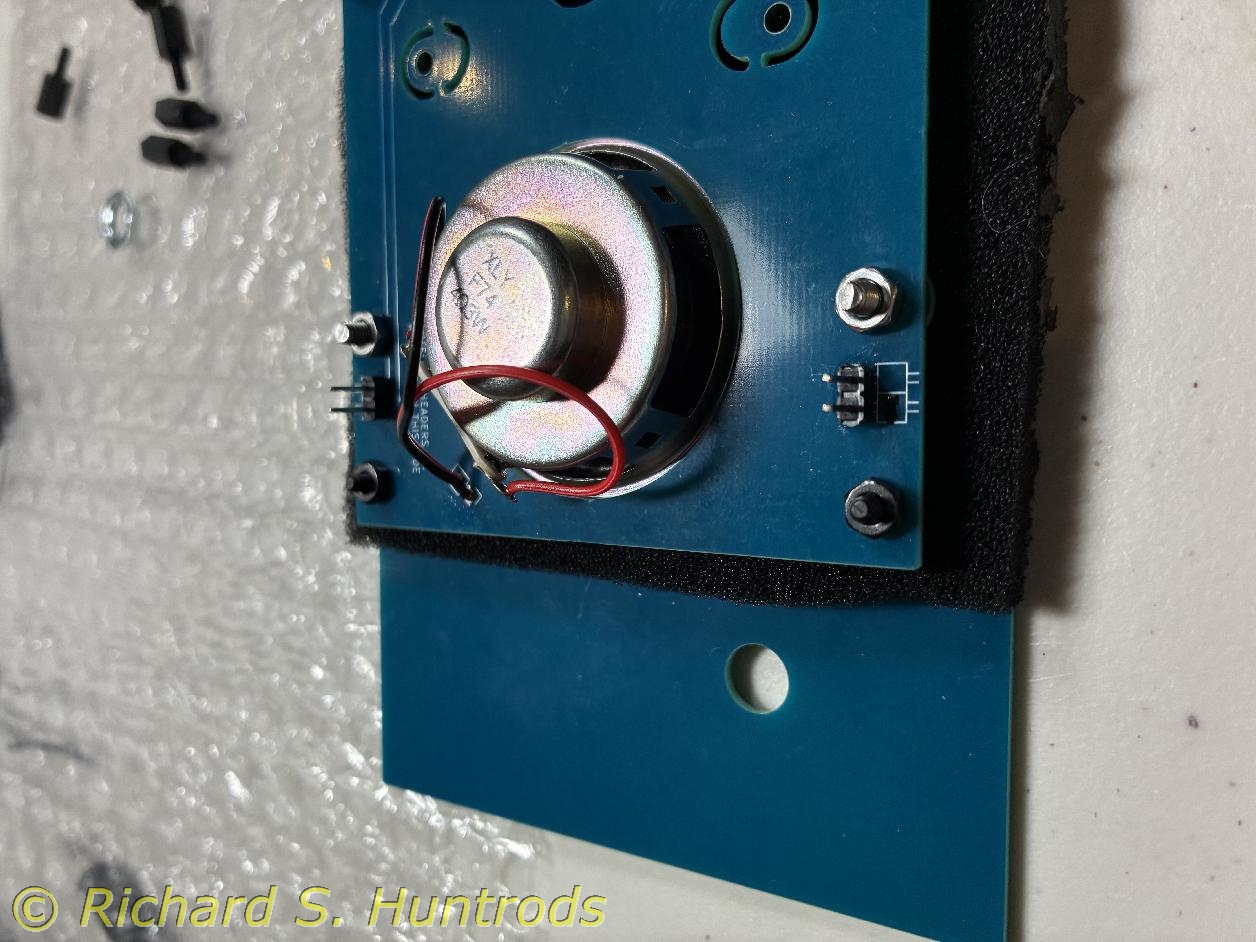

I do think it looks great! (in spite of the cat hair on the upper left!)
I also noticed from other pictures of the PDP-1 that I seem to have mine upside down. The volume control for the speakers goes on the RIGHT side near the bottom!
